
November 17, 2026 · Didadee
Amap vs Google Maps: Why Chinese Tourists Can’t Find Your Shop
Your shop is on Google Maps, but Chinese visitors open a different map. Here is what they see on Amap, and how to appear there.
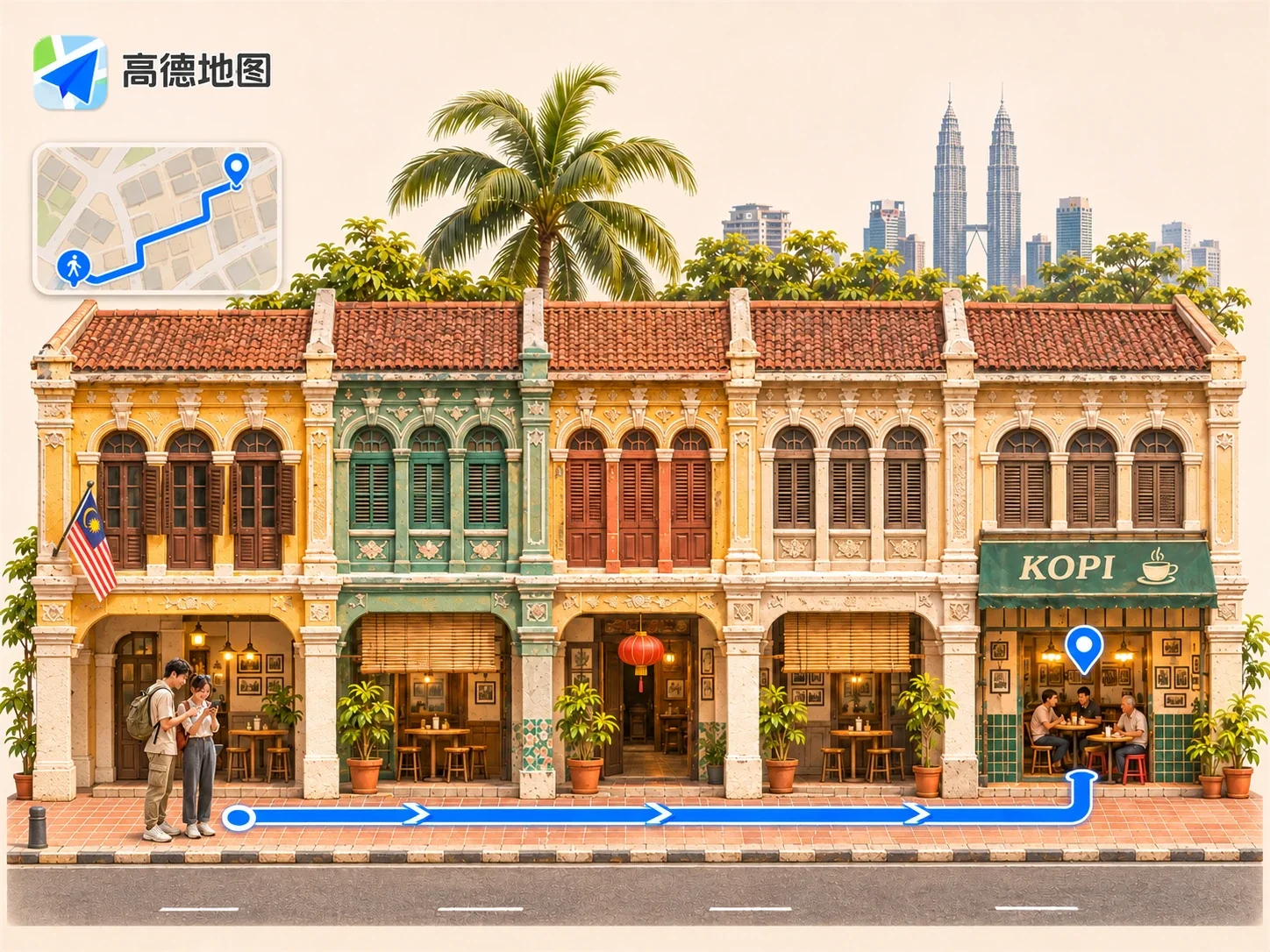
- Chinese visitors navigate with Amap, not Google Maps, and they keep using it in Malaysia.
- A shop that is only on Google Maps is hard for them to find: they search in Chinese, on a Chinese map.
- You need both: Google Maps for everyone else, and a verified Amap listing for Chinese visitors.
Two maps, two audiences
Google Maps is where locals and most international visitors look for a place to eat or shop. Chinese visitors are the exception. Google’s services are not available in mainland China, so people there grow up with a different map: Amap, known in Chinese as 高德地图.
 Google Maps
- Used by
- Locals, and visitors from most countries
- Language
- English and local languages
- Chinese visitors
- Most arrive without it, as it is not available in mainland China
- Your listing
- Google Business Profile, set up by you
 Amap高德地图
- Used by
- Close to a billion people a month, mostly from mainland China
- Language
- Chinese
- Chinese visitors
- Search, compare and navigate here
- Your listing
- Opened through an authorised Amap agency
Why Chinese visitors keep using Amap in Malaysia
- It is already on their phone. Most phones sold in mainland China come without Google Maps.
- It works in Chinese. Search, shop names, menus and reviews are in the language they read fastest.
- It covers the whole trip. Routes, shops and rides are in one app, the same one they use at home.
About 650,000 people use Amap inside Malaysia every month.
What a Chinese visitor sees when they search for you
Picture a visitor on your street, looking for a kopitiam. They open Amap and search nearby. What happens next depends on your listing.
- No listing. Your shop does not appear. The visitor chooses from the places that do.
- A bare pin. A name on the map with no photos, no hours and no menu. They cannot tell what you sell, which makes you hard to choose.
- A verified listing. Your Chinese name, photos, signature dishes and reviews, with a route to your door.
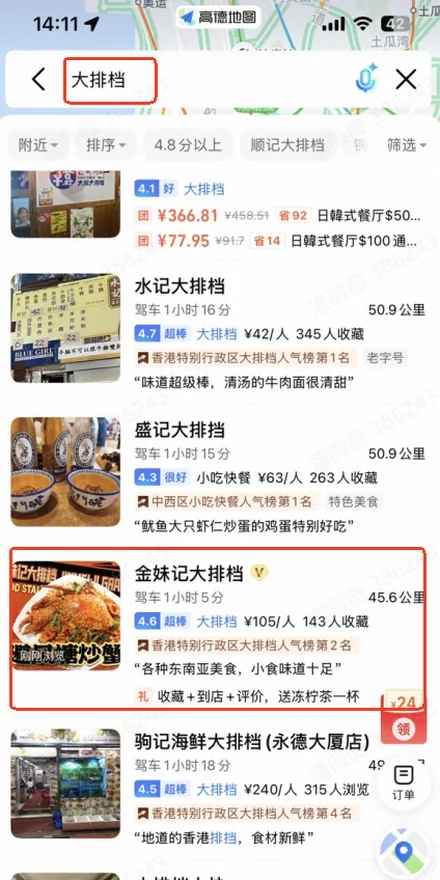
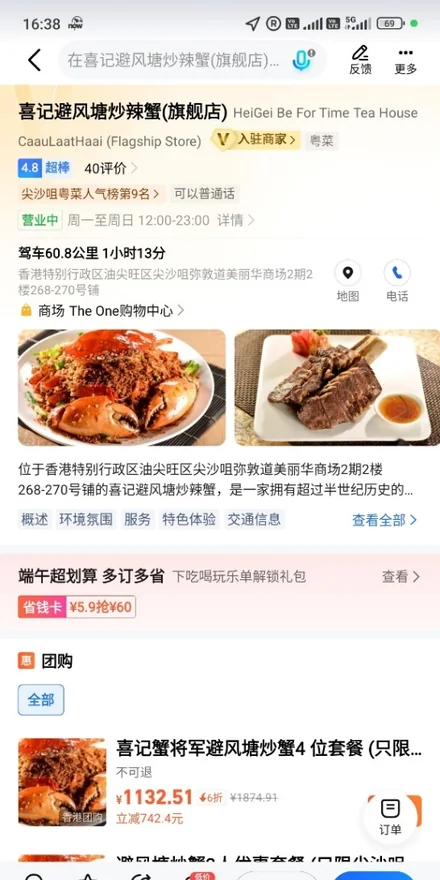
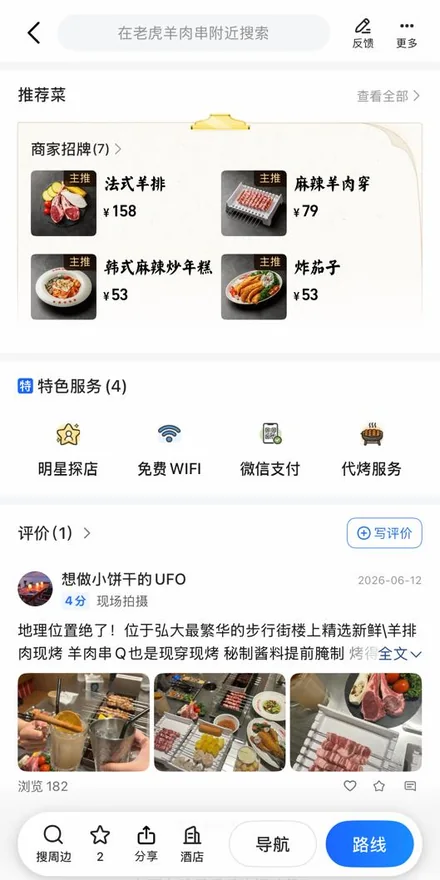
Screens show example merchant pages on Amap.
The same thing happens when they have already seen you on Xiaohongshu or Douyin. They tap Navigate, Amap opens, and the trip continues only if your shop is there.
The reasons you are on Google Maps apply to Amap too
You already know why a shop needs Google Maps. A verified Amap listing does the same job, for the visitors Google does not reach.
| Why shops list on Google Maps | The same on Amap |
|---|---|
| To be found when someone nearby searches | Your shop appears when a visitor searches nearby, in Chinese |
| To look trustworthy at a glance | A verified badge, your Chinese name, photos and signature dishes |
| To show the right information | Opening hours, phone number and address, kept up to date |
| To turn a search into a visit | A route and navigation to your door, with a pin for every outlet |
| To collect and answer reviews | Reviews in Chinese that you can reply to |
| To give people a reason to come in | Walk-in offers shown on your store page |
| To see what is working | Your own dashboard with daily figures: searches, route taps, navigations and calls |
Once it is set up, the listing stays live all year. There is no daily posting.
How does your shop look on Amap today? Send us your shop name and we will check. There is no charge for the report.
Do you still need Google Maps?
Yes. Google Maps brings you locals and visitors from everywhere else, and Amap changes nothing about that. Amap adds the Chinese visitor, who was not going to find you on Google. Keep both listings accurate, with the same address, opening hours and phone number.
How to get your shop on Amap
A business in Malaysia does not need a company in China. As an authorised Amap agency, Didadee opens the listing with your Malaysian business registration.
- Send us your shop name, address and business registration.
- We verify the listing and build your store page in Chinese.
- Your shop goes live, usually within 14 working days once your materials are complete.
- When you want more visitors, add nearby-search promotion or brand ads.
Read more: Get your restaurant or café on Amap · Chinese version · Amap for all business types
Frequently asked questions
Is Amap the same as Gaode Maps (高德地图)?
Yes. Amap is the official English name of 高德地图, China’s largest map app. Gaode is how the Chinese name is pronounced, so you will see both names used.
Do Chinese tourists use Google Maps in Malaysia?
Mostly not. Google’s services are not part of daily life in mainland China, so visitors keep using the map they know. On Amap they can search and read everything in Chinese.
I have several outlets. Do I need one listing or many?
Each outlet gets its own verified pin, so a visitor nearby is shown the one closest to them.
I am not a restaurant. Can I be on Amap?
Yes. Retail shops, spas, clinics and attractions can all be listed, as long as you have a physical outlet.
Related: How to attract Chinese tourists to your business in Malaysia · Dianping in Malaysia
Be on their map
Chinese visitors are already near your shop. Tell us its name and we will show you how it looks on Amap today.
- Written by
- Didadee
Kuala Lumpur - Updated
- November 17, 2026
- Talk to us
- Book a consultation ↗